24 Hour Service Hotline:0769-22710188 / 13713357162



Flux is a chemical that helps and promotes the welding process during the process, while also providing protection and preventing oxidation reactions. Based on their form, they can be divided into three main categories: solid, liquid, and gas.
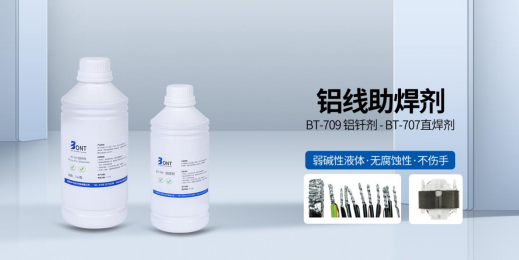
Flux usage is divided into two categories: automated equipment operation and manual welding, along with standardized requirements for storage, safety, and daily maintenance. Improper operation can directly lead to poor welding and workshop safety hazards.
1. Coating control: Adjust spraying flow rate according to board thickness and copper foil area. The board surface should be evenly covered with a thin layer of flux, as excessive amounts can cause large residues and residual whitening.
2. Temperature matching: Segmental control of preheating temperature, slow solvent evaporation, preventing solder bursting and pinhole on the board; The solder furnace temperature is set according to the standards for lead-free or leaded solder; excessively high temperatures accelerate flux failure and produce large amounts of flue gas;
3. Equipment maintenance: Regularly clean spray nozzles and flux storage tank filters to filter out metal impurities and sediment; Long-term production requires regular testing of liquid specific gravity; after solvent loss, add original factory diluents, and mixing different brands of diluents is prohibited.
Before welding the workpiece, remove surface oil stains and dust, and only apply a thin layer of flux to the substrate; do not soak the base material for extended periods; Soldering iron temperature matches flux activity; if too low, wetting is poor; if too high, activity is quickly consumed; After daily production, the remaining flux is sealed and recovered, and is not mixed with new base liquid to prevent component layering and failure.
Keep the storage environment cool and ventilated, control the temperature between 5-35°C, store sealed away from light, and try to use up within 3 months after opening. Keep away from high-temperature heat sources, open flames, and strong oxidizers; The workshop maintains continuous ventilation, and operators wear solvent-resistant labor protection gloves; If the skin or eyes come into heavy contact, rinse immediately with running water; Waste flux is classified as chemical waste liquid and must be handed over to qualified units for centralized disposal; direct dumping is not allowed
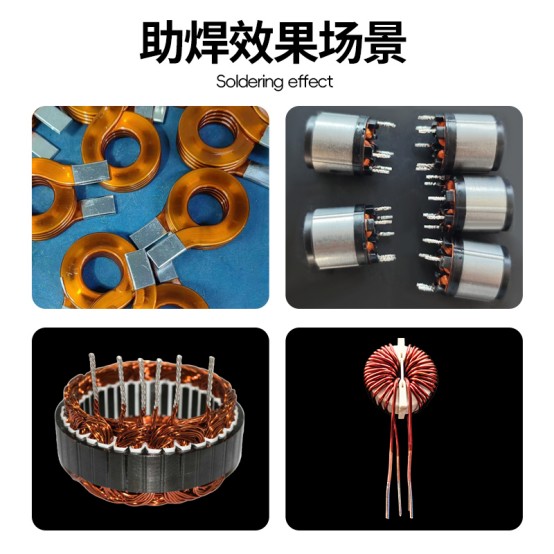
Dongguan Bangte was established in 2004, independently developing copper flux, aluminum flux, no-clean halogen-free flux, direct flux, and a full range of environmentally friendly fluxes suitable for various high and low transformers, power distribution boxes, and lighting distribution boxesHigh-power voltage stabilizers, high-precision fully automatic voltage stabilizers, isolation transformers of various models, motors, etc., with bright solderFirm and hard, no cold soldering, no solder cracks. The sub-series covers drones, robots, white goods, and automotive electronics. Solder joint strength, contact resistance, and wettability all meet automated precision welding standards, with a stable mass production yield of over 99.5%.
1. Full set of compliance qualifications: The full range of fluxes holds national standard testing reports for SGS, RoHS, REACH, VOC; The company holds a full set of certificates for ISO9001, IATF16949, safety production, hazardous chemicals operation, and pollution discharge permits, supporting customer factory audits and customs environmental protection audits.
2. Supporting technical services: free delivery of samples for testing of the corresponding model; Providing paint removal welding solutions. Each batch includes an MSDS safety manual and test report; Complete technical parameter documents can be downloaded from the official website.
3. Capacity and Quality Control Assurance: Automated synthesis production line with dual inspection of raw materials and finished products, ensuring stable batch performance; Supports small-batch samples and stable large-scale supply, offering customized solutions for low-VOC and high-temperature-resistant specialty fluxes.
1. Q: How can I solve cold solder joints and excessive solder tips in copper wire soldering? A: Replace with Bonte BT-706 halogen-free copper flux, strictly control the tin oven at 280-300°C, apply a thin layer of flux, and avoid excessive accumulation.
2. Q: Is aluminum wire welding prone to oxidation and poor soldering? A: Ordinary copper flux is not suitable; for small consumer electronics, BT-709 specialized aluminum flux is used for new energy automated production lines.
3. Q: Is additional paint removal equipment required for enameled wire welding? A: Using BT-707 direct flux eliminates the need for paint removal and solder integration, eliminating the need for paint removal steps and reducing equipment investment.
4. Q: What should I do if the export products do not meet halogen or environmental protection standards? A: Bonte: The entire product line is halogen-free, with a complete set of environmental protection reports, and can be directly used in Europe, America, and automotive supply chains.
5. Q: Will flux be stored for a period of time and become layered or ineffective? A: Store sealed and protected from light, regularly check specific gravity, and promptly add diluent as solvent evaporates occur; Do not mix different models; use up as soon as possible after opening.



bontzzz
0769-22710188
徐小姐:13712980628
zzz@bont.cn
广东省东莞市万江街道泰新路551号

 WeChat
 Request Samples
 Home
Home